Arizona Buyers Have Real Leverage Right Now. Here Is How to Use It
Arizona buyers have not had this much negotiating room in five years. In July 2026, 75% of Arizona single-family homes sold below original list price and only 12% sold above, compared with 63% selling above original list price in July 2021, according to ARMLS. That is a complete reversal, and most buyers are still negotiating as if it were 2021.
Is it a buyer's or seller's market in Arizona right now?
Most of Arizona favors buyers in fall 2026. In July 2026, 75% of Arizona single-family homes sold below original list price, 14% sold at list, and only 12% sold above, per ARMLS. Five years earlier, 63% sold above list. Buyers can now negotiate price, credits, and terms in most Valley submarkets.
Supporting conditions:
Greater Phoenix inventory rose 8.3%, and the affordability index improved from 71 to 77, meaning 77% of households can afford the median home, per the Arizona Digital Free Press.
Arizona home prices rose just 2.0% year over year in June, while homes sold rose 4.8% and homes for sale fell 3.1%, per Redfin.
Nationally, July 2026 existing-home sales fell 1.7% to a 4.06 million annual rate, with a $431,400 median price and 4.6 months of supply, per the National Association of REALTORS.
The 30-year fixed-rate mortgage averaged 6.65% as of August 20, 2026, per Freddie Mac.
Rates are the reason leverage exists. J.P. Morgan notes that with mortgage rates hovering around 6.6%, the financial cost of moving has become prohibitive for many, which thins the buyer pool and makes each remaining qualified buyer more valuable to a seller.
What 7 concessions can Arizona buyers actually ask for?
Buyers should negotiate more than price. The seven concessions below are routinely agreed to in Arizona right now, and several improve your monthly payment more than a price cut of the same dollar amount would.
A mortgage rate buydown. Ask the seller to pay points that lower your rate, temporarily or permanently. With the 30-year fixed at 6.65% per Freddie Mac, this is often the highest-value ask available.
Closing cost credits. A seller credit toward lender fees, title, escrow, and prepaids reduces cash needed at closing without changing your loan amount.
Repair credits. Instead of asking the seller to complete repairs, take a credit and control the work and the contractor yourself after closing.
Appliances and equipment. Refrigerator, washer, dryer, pool equipment, water softener, and mounted televisions are all negotiable in writing.
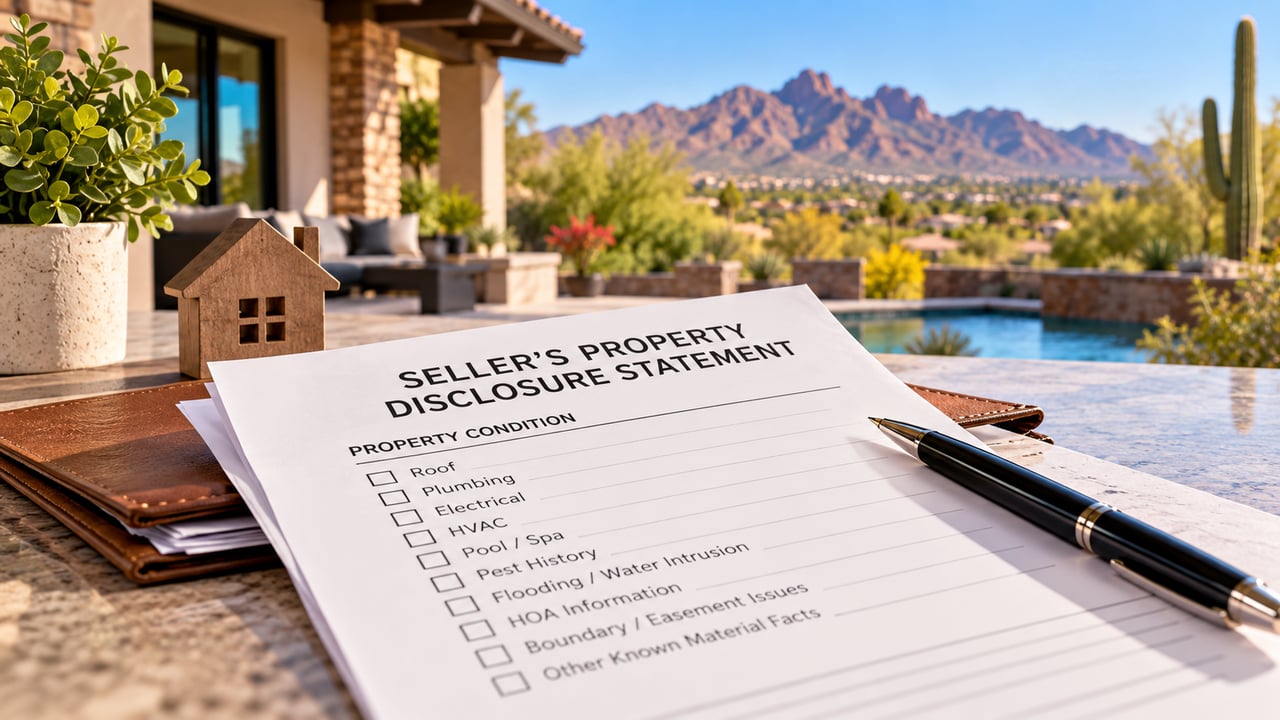
An extended inspection period. More days means time for a roof specialist, HVAC technician, pool inspection, and sewer scope rather than one general pass.
A home warranty. A seller-paid first-year warranty covering HVAC, plumbing, and major appliances is a small ask that protects a big line item.
A flexible possession date. Align closing and move-in with your lease end, school calendar, or the sale of your current home, which is worth real money in avoided double housing costs.
Where in the Valley do buyers have the most leverage?
Leverage is not uniform. Above-list closings in July 2026 concentrated in Phoenix, San Tan Valley, Surprise, and Mesa, per ARMLS, so those submarkets are tighter and more competitive. Scottsdale and Paradise Valley are where negotiation is easiest, with longer market times and fewer competing offers.
That last row is the most useful line in this article. Competition in Arizona is concentrated below roughly $450,000. Above that, and especially in Scottsdale and Paradise Valley, you are usually the only offer on the table.
How much below asking can you offer in Scottsdale?
There is no fixed percentage. The right number comes from days on market, price history, and closed comparables on that street. In Scottsdale, homes are selling in around 68 days with an average of 1 offer, per Redfin, which means a well-supported offer below list is normal rather than insulting.
Ask these five questions before writing the offer:
How many days has this home been on the market, and has the price already been reduced?
What did comparable homes on the same street actually close for in the last 60 days?
Is the seller occupied, vacant, or already relocated? Vacant carries a carrying cost.
Has it fallen out of escrow before, and why?
What does the seller need most, price, timing, or certainty?
What is the local context buyers should not ignore?
Arizona still has a structural housing shortage, and that limits how far prices can fall. The state faces an immediate need for roughly 56,000 more housing units than the market can provide, according to the Common Sense Institute Arizona. Waiting indefinitely for a collapse is a strategy with a weak foundation.
Activity is also improving. June sales volume in the MLS finished about 8% higher than a year ago, per ARMLS.
CITIEA Realty is one of the largest and highest-producing real estate brokerages in the Valley, closing $878,781,970 in real estate volume across 1,658 transactions in 2025, serving Scottsdale, Phoenix, Paradise Valley, and communities across Maricopa County.
What Our Clients Say
"Tasha and Ciara were fantastic to work with and would highly recommend them to anyone buying or selling a home. 5 Stars all around (would leave a 10 star review if I could)." Dave
"Diana did an awesome job not only to quickly find a buyer for my home but also to get my fiancée and me into our first home together. She really stayed on top of the transactions, conducting negotiations in a timely and effective fashion. Definitely recommend." CITIEA client
Ready to negotiate with the data on your side?
Leverage only helps if your offer is built on current numbers for your exact street and price point. Bring us the address you are considering and we will tell you what the last 60 days actually support. Start at citiea.com.
Frequently Asked Questions
Is it a buyer's or seller's market in Phoenix?
Phoenix is tighter than the rest of the Valley. It was one of the metros where above-list closings concentrated in July 2026. Buyers still have room there, but less than in Scottsdale or Paradise Valley.
How much below asking can I offer in Scottsdale?
There is no universal percentage. Base it on days on market, prior price reductions, and closed comparables within the last 60 days. With Scottsdale homes selling in around 68 days and averaging 1 offer, offering below list with supporting data is standard practice.
What is a mortgage rate buydown?
A rate buydown is prepaid interest, usually paid by the seller, that lowers your mortgage rate either for the first few years or permanently. With the 30-year fixed averaging 6.65% as of August 20, 2026, a seller-funded buydown often lowers your monthly payment more than an equivalent price reduction.
Are sellers paying closing costs in Arizona right now?
Frequently, yes. With 75% of Arizona single-family homes selling below original list price in July 2026, sellers are agreeing to credits toward closing costs, repairs, and rate buydowns. It is a standard part of Arizona negotiations in this market.
Will prices drop more in 2027?
No one can promise a direction, and Arizona's supply shortage argues against a steep decline. The state needs roughly 56,000 more housing units than the market can provide, while Fannie Mae and the Mortgage Bankers Association both project 30-year mortgage rates in the mid-6% range through 2026 and 2027, with Fannie Mae expecting roughly 6.3%, per PalmTech.
That is CITIEA 1 through 5. Say "next" and I'll post CITIEA 6 through 10, then the two HLN batches.