By Citiea
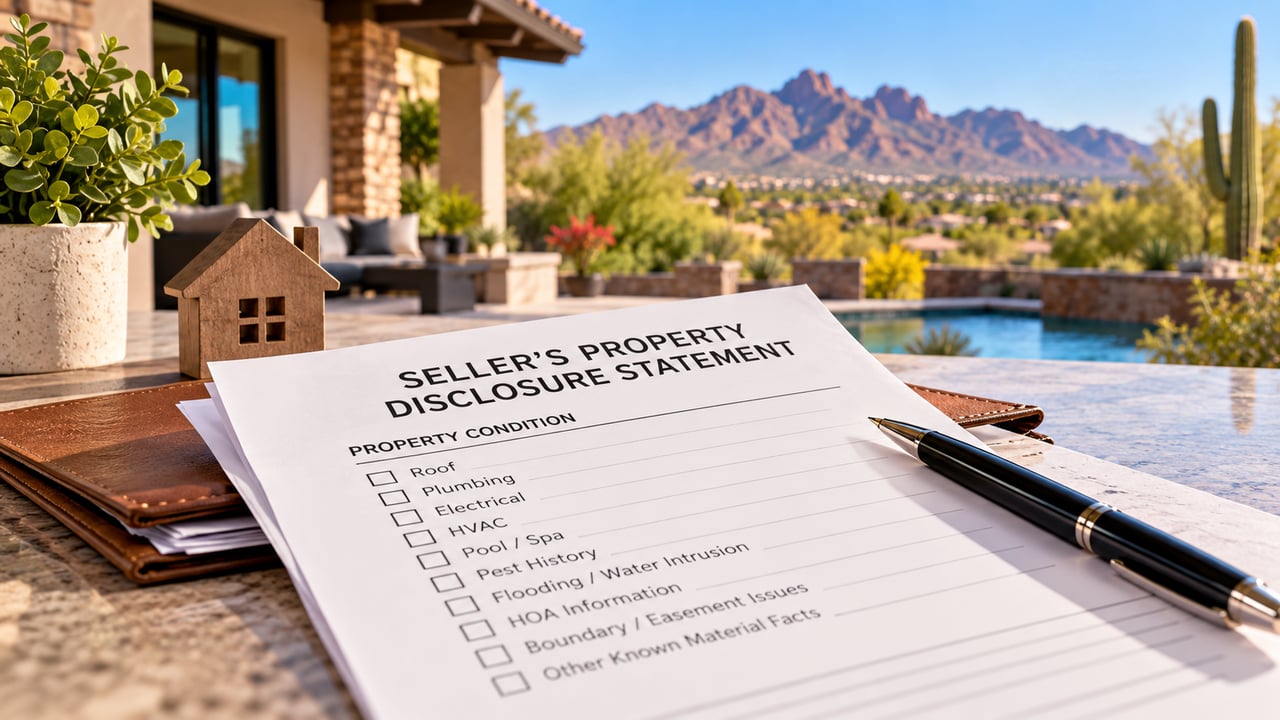
A property inspection on a $5M custom estate in Phoenix, AZ, is an entirely different undertaking than a standard residential inspection — and buyers who approach it the same way consistently discover that after closing. The complexity of systems in a luxury Arizona home, the scale of the construction, and the specific ways desert climate degrades high-end materials create a due diligence requirement that goes well beyond a single general inspector with a checklist. We've guided buyers through some of the most significant acquisitions in the Phoenix metro, and what we've learned is that the inspection period is where luxury purchases are either protected or exposed.
Key Takeaways
- A general home inspection alone is inadequate for a luxury Phoenix property — specialist inspections across HVAC, roofing, pool systems, and smart home infrastructure are essential
- Arizona's climate creates specific failure patterns in high-end homes that buyers from other markets don't anticipate
- Unpermitted improvements are common in luxury custom construction — pulling permit history is non-negotiable due diligence
- The standard Arizona inspection period is ten days from contract acceptance — at the luxury level, that window requires immediate, coordinated action
Why Luxury Phoenix Home Inspections Require a Different Standard
A custom estate in Scottsdale, Paradise Valley, or the North Phoenix corridor carries systems and materials that require specialist-level evaluation. A multi-zone HVAC system serving 6,000 to 12,000 square feet under Arizona's sustained summer heat is not the same as a residential unit a general inspector checks off in 20 minutes. A fully automated pool and spa with water features, automated chemical dosing, and integrated lighting requires a dedicated pool technician. A home running Crestron or Lutron automation with whole-home audio and integrated security needs a technology audit, not a visual observation.
The general inspection remains the foundation — it covers structure, electrical panels, plumbing, attic insulation, and visible systems. But at the luxury level, it's the starting point, not the conclusion. The buyers we work with who are best protected at closing are the ones who approach the inspection period with a coordinated team of specialists, not a single inspector working from a standard checklist.
The general inspection remains the foundation — it covers structure, electrical panels, plumbing, attic insulation, and visible systems. But at the luxury level, it's the starting point, not the conclusion. The buyers we work with who are best protected at closing are the ones who approach the inspection period with a coordinated team of specialists, not a single inspector working from a standard checklist.
Specialist Inspections That Matter at the Luxury Level
- Dedicated HVAC technician: multi-zone system assessment, refrigerant type, compressor health, ductwork condition, and remaining service life per zone
- Roofing specialist: underlayment condition beneath tile surfaces, flashing at complex rooflines, parapet walls, and roof penetrations — thermal imaging for moisture intrusion
- Pool and spa specialist: automation systems, heaters, salt cells, water features, plumbing integrity, and finish condition — deferred pool maintenance is one of the largest hidden costs in this market
- Technology audit: Crestron, Lutron, audio, and security platform condition, compatibility, and warranty status
- Termite inspection (WDIIR): mandatory for VA and FHA loans, essential for all buyers — Arizona is among the most active termite markets in the country
- Sewer scope: root intrusion and pipe condition are invisible without it — critical for any estate with mature landscaping
The Arizona Inspection Period: Ten Days That Require Immediate Action
Under the standard Arizona Association of Realtors purchase contract, buyers receive ten days from contract acceptance to complete inspections and submit a written Buyer Inspection Notice. At the luxury level, that window requires same-day action. Coordinating a general inspector, a roofing specialist, an HVAC technician, a pool company, a technology auditor, and a termite inspector across a ten-day window — while the results come in and get reviewed — demands a level of logistics that buyers without strong local representation routinely underestimate.
For out-of-state buyers, this is where local representation with deep vendor relationships becomes a genuine differentiator. Having a trusted roofer, a Crestron-certified tech, and a pool specialist who can get on a property within 48 hours is not something you assemble from search results during an active inspection period.
For out-of-state buyers, this is where local representation with deep vendor relationships becomes a genuine differentiator. Having a trusted roofer, a Crestron-certified tech, and a pool specialist who can get on a property within 48 hours is not something you assemble from search results during an active inspection period.
What to Pull and Confirm Before or During the Inspection Period
- City and county permit records: custom estates frequently have casitas, additions, pool work, or mechanical replacements done without permits — these affect insurance, financing, and resale
- Solar system documentation: owned vs. leased, system capacity relative to actual energy load, warranty status, and any utility interconnection agreements
- HOA architectural review history: modifications approved or flagged by the community's review committee
- Service records for HVAC, pool, and smart home systems — a well-maintained estate will have documentation; the absence of it is informative
The Climate-Specific Failures That Catch Luxury Buyers Off Guard
Arizona's extreme heat, monsoon moisture, and UV intensity create wear patterns that buyers arriving from moderate climates simply haven't encountered. Tile roofing is one of the most misunderstood systems in this market. The tile itself is highly durable and may look pristine for decades, but the underlayment beneath it — the waterproofing membrane that does the actual work — has a finite lifespan and fails invisibly. On a large custom home with a complex roofline, underlayment replacement can be a six-figure undertaking. A general inspector noting "tile roof in good condition" is not the same as a dedicated roofer with thermal imaging confirming underlayment integrity.
Stucco on estate-scale homes presents a similar dynamic. Expansive exterior surfaces, complex architectural details, and multiple roof penetrations create more exposure to monsoon-season moisture intrusion than a standard residential build. Cracks near window frames, roof intersections, and anywhere irrigation contacts the exterior can indicate active moisture intrusion — not normal settling. A stucco specialist with thermal imaging and moisture detection equipment can identify hidden damage that a visual walkthrough entirely misses.
Stucco on estate-scale homes presents a similar dynamic. Expansive exterior surfaces, complex architectural details, and multiple roof penetrations create more exposure to monsoon-season moisture intrusion than a standard residential build. Cracks near window frames, roof intersections, and anywhere irrigation contacts the exterior can indicate active moisture intrusion — not normal settling. A stucco specialist with thermal imaging and moisture detection equipment can identify hidden damage that a visual walkthrough entirely misses.
The Most Consequential Findings in Luxury Phoenix Inspections
- Tile roof underlayment failure — expensive and invisible without a dedicated roofer and thermal imaging
- HVAC units over 12 years old or using outdated refrigerant — replacement on a multi-zone luxury system can reach $50,000 or more
- Stucco moisture intrusion at complex rooflines or window penetrations — caught late, remediation is invasive and costly
- Unpermitted casitas, additions, or pool modifications — these complicate insurance, financing, and future resale
- Deferred pool automation or finish work — easily $30,000 to $80,000 on a high-end outdoor living setup
- Smart home systems running on obsolete platforms or without transferable support agreements
Frequently Asked Questions
Do luxury home sellers in Phoenix typically provide their own inspection reports?
Some do, particularly sellers of well-maintained estates who want to demonstrate transparency and reduce buyer uncertainty. A seller-provided pre-listing inspection can be useful context, but it doesn't replace your own due diligence. We always recommend independent inspections — the inspector's obligation runs to the party who hired them, and a fresh set of eyes with no prior relationship to the property is always worth the investment.
How do we negotiate repairs or credits on a luxury Phoenix property after inspection?
The approach depends on what the inspections reveal and the specific dynamics of the transaction. Material findings — an aging multi-zone HVAC, failing roof underlayment, or unpermitted improvements — are legitimate grounds for a price adjustment or credit at closing. Cosmetic or deferred maintenance items require more judgment. We help our buyers identify which findings are worth pushing on and how to frame requests in a way that keeps the transaction intact rather than triggering an adversarial response from the seller.
Is a ten-day inspection period negotiable in Arizona?
Yes — the timeframe is a contract term, not a legal mandate, and it can be extended by mutual agreement. For a particularly complex estate or when specialist availability is limited, requesting 14 or even 21 days is a reasonable ask that many sellers will accommodate. We factor inspection period length into our offer strategy from the outset, particularly for large custom properties where thorough due diligence is non-negotiable.
Contact Citiea About Buying in Phoenix
The inspection period on a significant acquisition is not the time to improvise. We've completed nearly 1,500 closings across the Phoenix metro — including transactions at the highest end of the market — and we maintain the specialist relationships and transaction experience to protect your investment from contract to close.
Reach out to us, Citiea. Let's talk through your acquisition, your timeline, and exactly how we approach due diligence at the level this purchase deserves.
Reach out to us, Citiea. Let's talk through your acquisition, your timeline, and exactly how we approach due diligence at the level this purchase deserves.